
Understanding your Payslip

Understanding your Payslip
July 31, 2026 | Bikram Giri | Payroll
Quick Links
Jump straight to finding the answer you need:
What is a payslip?
A payslip is a physical or digital document provided by your employer that shows how much you have earned during a specific pay period and how your final payment was calculated. It breaks down your earnings, including your salary or wages, alongside any deductions taken before your money reaches your bank account.
Sophia Joined Ridgefield Consulting on a summer internship, where she researched how to understand a payslip from the perspective of students and graduates starting their first jobs. Here she shares her insights and why understanding your payslip matters.
As a student having recently started my first job, I quickly realised how important it is to understand a payslip. For many students and graduates, a first graduate role is the first time they receive a payslip with deductions for Income Tax, National Insurance, pension contributions, and student loan repayments. Without understanding these deductions, it can be difficult to know whether you’re being paid correctly or why your take-home pay is lower than your advertised salary.
Understanding your payslip is an essential financial skill because it helps you manage your income, create a realistic budget and plan for future financial commitments such as rent, bills and savings. It also allows you to identify any errors, such as incorrect tax codes or unexpected deductions, before they become costly problems. As many graduates begin to take on greater financial responsibilities, knowing how to read a payslip gives you confidence, improves financial awareness and helps you make informed decisions about your money.
What Information Appears on a Payslip?

Personal Details
- Employee Details- This will include your department and job title in addition to your working hours and contract type.
- Payroll Number- This is a distinctive reference assigned to an employee by their employer’s payroll system used to identify the employee when processing wages, taxes, and other related information.
- Employer Information – This will contain details about the organisation that employs you, such as the company name, department and payroll contact details.
- Pay period and Payment Date-This is a record of when you are being paid and how many hours you worked over the period.
Understanding Your Payslip Earnings:
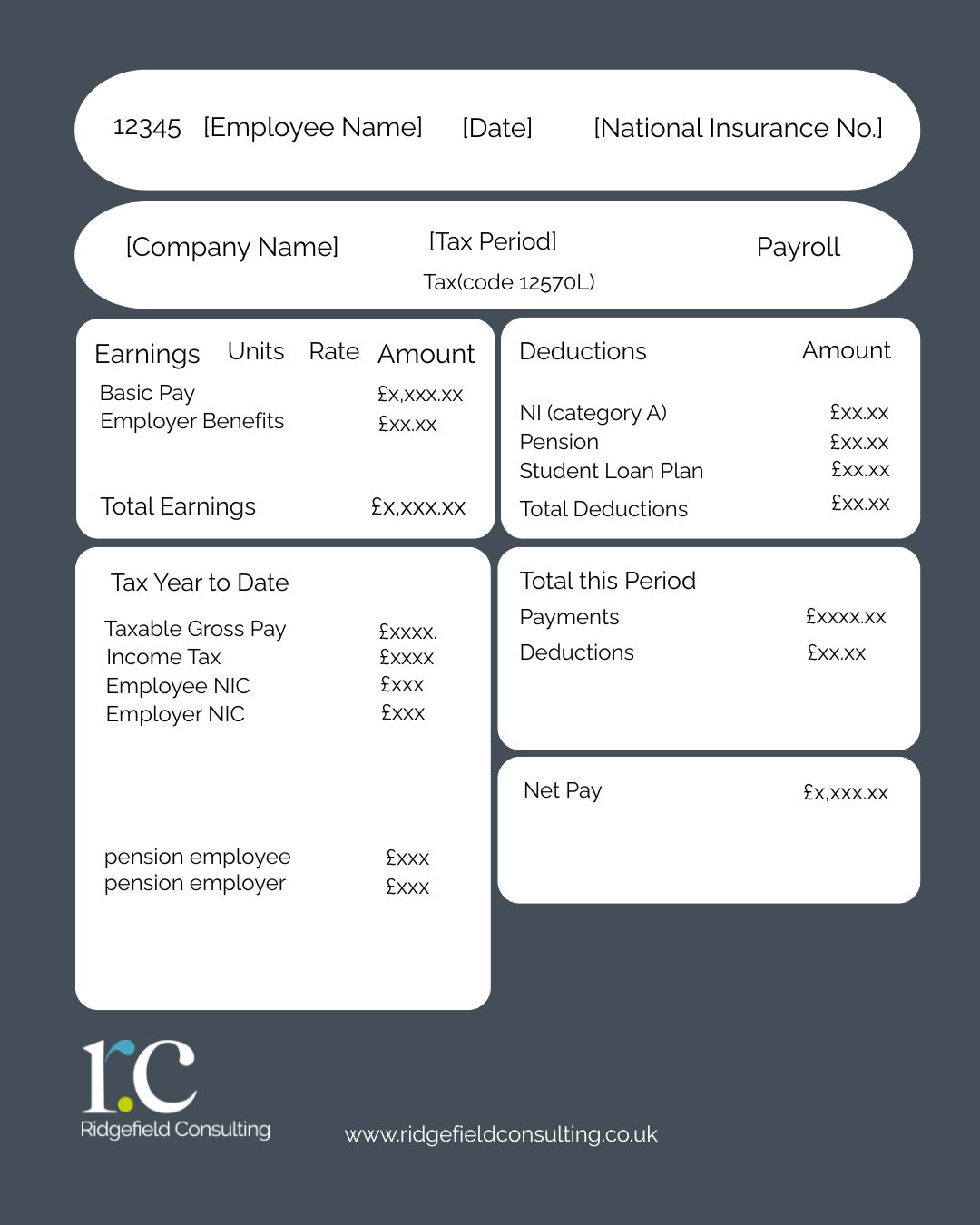
When you receive your payslip, your earnings will be listed which include both basic pay and any employer benefits that you are entitled to. Your payslip will show both your gross pay and net pay. While both relate to your earnings, they represent different amounts.
What is Gross Pay?
Gross pay accounts for your earnings before deductions and may include your salary, overtime, any bonuses and allowances.
What is Net Pay?
Net pay is your take-home pay and therefore is the left-over amount that reaches your bank account after deductions such as income tax and national insurance.
Why do we pay Income Tax?
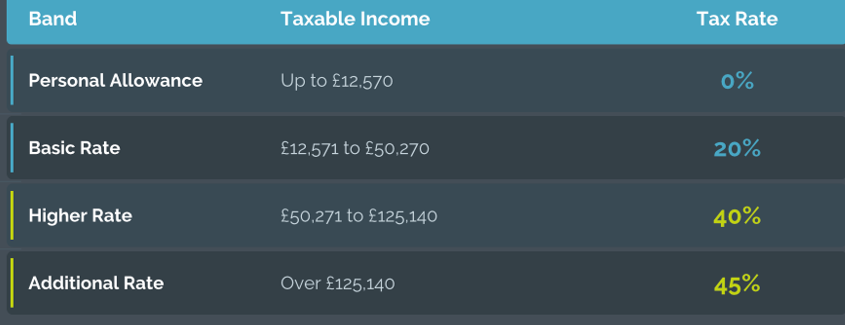
Income Tax helps fund public services such as the NHS, education, transport infrastructure, and other government services. Whether you pay Income Tax depends on how much you earn. Most employees are entitled to a Personal Allowance of £12,570 per tax year, meaning they do not usually pay Income Tax on earnings up to this amount. Any income above the Personal Allowance is generally taxed at the relevant Income Tax rate according to the applicable tax bands.
Payslip Deductions Explained:
Your payslip will also include any deductions that have been made you’re your gross pay. These deductions are listed individually.
What Deductions Can Appear on Your Payslip?
- Income Tax
- National Insurance
- Pension contributions
- Student/ postgraduate loan repayments
What is the Personal Allowance?
A common misconception is that you pay tax on everything you earn, but this is not the case. For the 2026/27 tax year, the standard Personal Allowance is £12,570, meaning you do not pay Income Tax on earnings up to this amount.
Any income above your Personal Allowance is taxed according to the relevant tax bands. The Basic Rate of 20% applies to taxable income between £12,571 and £50,270. The Higher Rate of 40% applies to taxable income from £50,271 to £125,140, while the Additional Rate of 45% applies to income over £125,140.
If your adjusted net income exceeds £100,000, your Personal Allowance is reduced by £1 for every £2 earned above this threshold. As a result, your Personal Allowance is completely withdrawn once your income reaches £125,140 or more.
What is National insurance?
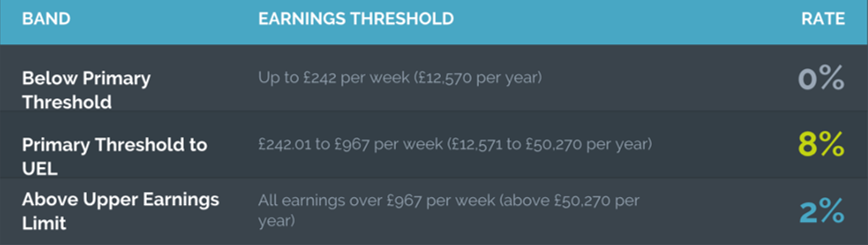
National insurance is a tax on earnings and self-employed profits, which contributes to the operations of the NHS, funds the State Pension and welfare benefits such as the JSA and Maternity Allowance. This is automatically deducted through payroll.
What is a Tax Code on Your Payslip?
A tax code is allocated to an employee by HMRC and informs your employer of how much tax- free income you receive before deductions. For instance, if your code is 1257L, you have an annual tax-free allowance of £12,570.
Common UK Tax Codes Explained:
Your tax code determines how much income tax is deducted from your pay. Here are the most common codes and what they mean.
0T: No Personal Allowance: HMRC does not yet have enough information about your tax, or your allowance has been used elsewhere.
1257L: Standard Tax Code- The most common code for employees. It means you receive the standard Personal Allowance of £12,570
BR: Basic Rate- All income from this job is taxed at the basic rate (20%). Often used if you have a second job.
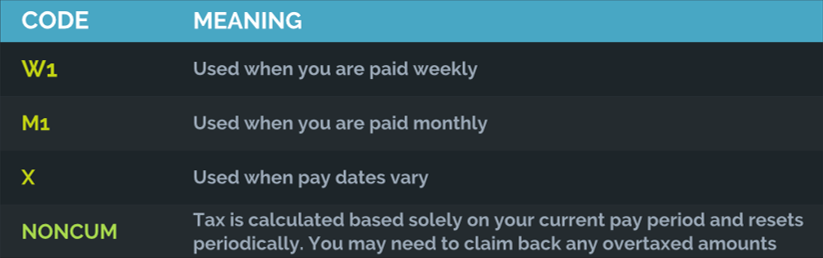
1257L W1/M1: Emergency Tax Code- A temporary code often used when starting a new job before HMRC has all your details.
K: Negative Allowance- Used when taxable benefits or unpaid tax from previous years exceed your Personal Allowance.
Why do I have an Emergency Tax Code?
These codes indicate that HMRC is calculating your tax on a non- cumulative basis – using only the current pay period rather than your year-to-date earnings.
You may be assigned an emergency tax code if HMRC has not collected enough information about your income, commonly occurring when you start a new job without P45.
Why can your Tax Codes Change?
Tax codes change because your personal circumstances have shifted. This may be due to starting a new job, your employer not receiving your P45 when starting a new role or paying back underpaid tax from previous years.
How Do Workplace Pension Deductions Work?
In the UK it is a legal requirement for your employer to enrol you in a workplace pension, which you will see as a deduction off your gross pay before tax.
Your workplace pension would usually consist of an 8% minimum contribution which is typically made up of 5% from your wages (4% directly from your pay and 1% added by the government as tax relief and 3% from your employer). Depending on the type of pension scheme, part of your employee contribution may include tax relief from the government.
You may opt out of the auto-enrolment for the workplace pension through requesting it of employer, but it is a legal requirement to be enrolled.
How will my student loan be deducted from my pay?
Student loan deductions are taken directly from your salary or wages through the PAYE system once your income goes over a specific annual threshold. You repay a set percentage – typically 9% – only on the amount you earn above that threshold. The specific repayment terms depend on your specific loan plan type and your current income.
Common Pay Slip Acronyms Explained:
Here are some of the most common acronyms you may find on your payslip:
- ET (Earnings Threshold): The level of earnings you can receive before you start paying Income Tax.
- LEL (Lower Earnings Limit): The minimum amount you must earn before your earnings count towards certain National Insurance benefits, even if you do not pay National Insurance contributions.
- NIC (National Insurance Contributions): Payments made from your earnings that help fund state benefits, such as the State Pension and certain other entitlements.
- PAYE (Pay As You Earn): The system used by employers to deduct Income Tax and National Insurance contributions from your wages before you are paid.
- PP (Personal Pension): Payments you make into a personal pension scheme to save for your retirement.
- SSP (Statutory Sick Pay): The minimum amount employers must pay eligible employees who are unable to work due to illness for four or more consecutive days.
- YTD (Year to Date): The total amount earned, paid, or deducted from the beginning of the current tax year up to the present date.
- TY (Tax Year): The UK tax year, which runs from 6 April to 5 April of the following year.
FAQ’S:
Why am I being taxed when I haven’t earned £12,570 yet?
Your Personal Allowance is spread across the tax year, meaning you can usually earn up to your allowance before paying Income Tax.
If you are paid monthly, your Personal Allowance is divided across 12 months, meaning you receive a portion of your tax-free allowance each month. However, if your earnings exceed your available tax-free allowance at that point in the tax year, Income Tax may be deducted from your pay.
The UK tax year runs from 6 April to 5 April, and your Personal Allowance resets each tax year. Any unused allowance cannot usually be carried forward to the next tax year.
Why is my pay slightly different from my contracted amount on my first pay slip?
The most common reasons why your pay may be slightly different from your contracted amount consist of:
Prorated pay: This occurs if you started working mid- month or part-way through a pay period with your employer, and therefore your first payslip may only include payment for the days or hours worked during that pay cycle.
Tax code adjustments: HMRC may have assigned you a temporary emergency tax code which may result in overpaid tax if your employer did not receive your P45 before the payroll cut off. This could result in the incorrect amount of tax being deducted initially. If you have overpaid tax, this is usually corrected through your future payslips once HMRC updates your tax code.
Other Deductions: Workplace pension contributions and student loan repayments are automatically deducted from your account if you earn over the relevant threshold.
If I work more than one job, will I be taxed for both jobs?
If you work more than one job, you must be added to each employer’s PAYE (Pay As You Earn) system. As part of the onboarding process, you will be asked to complete a starter checklist. It is important that you provide accurate information so that HMRC can assign the correct tax code. This helps ensure you pay the right amount of tax throughout the year.
If you fail to declare that you have another job or provide incomplete information, you may be given a full Personal Allowance by more than one employer. This can result in underpaying tax, which you may have to repay later. Providing accurate information from the outset is therefore essential.
You will also need to identify your primary employer. In most cases, this will be the employer from whom you earn the highest salary. Your primary employer will normally apply your Personal Allowance through your tax code, making it easier to calculate the correct amount of tax on your earnings.
If your total earnings across two jobs are less than £12,570, you can ask HMRC to split your Personal Allowance between both employers. This allows you to make full use of your tax-free allowance while ensuring the correct amount of tax is deducted based on your combined income.
Why have I paid National Insurance but no Income Tax?
The National Insurance and Income Tax calculation processes and thresholds are different. National Insurance is paid weekly/ monthly, whereas income tax is assessed across the tax year using your yearly tax-free allowance.
Understanding your payslip can help you to manage your finances through ensuring your deductions including income tax and national insurance are correct, in addition to receiving the expected pay for the hours you have worked and spotting errors to your tax code. We encourage you to check your payslip regularly to prevent any mistakes accumulating.
Stay up to date
Subscribe to our monthly digest newsletter to stay on top of the latest tax changes, new rules, and practical tips.
Subscribe to our newsletter
Looking for some help?
If you’re ready to hire an accountant, then get started by completing our contact form for an introductory call to discuss your needs.
You can find out more about our Payroll service.
Related articles
We hope you enjoyed reading this article. If you would like to read
similar posts on this subject here are some more for you.
Back to Tax Guides Home